Share this article:
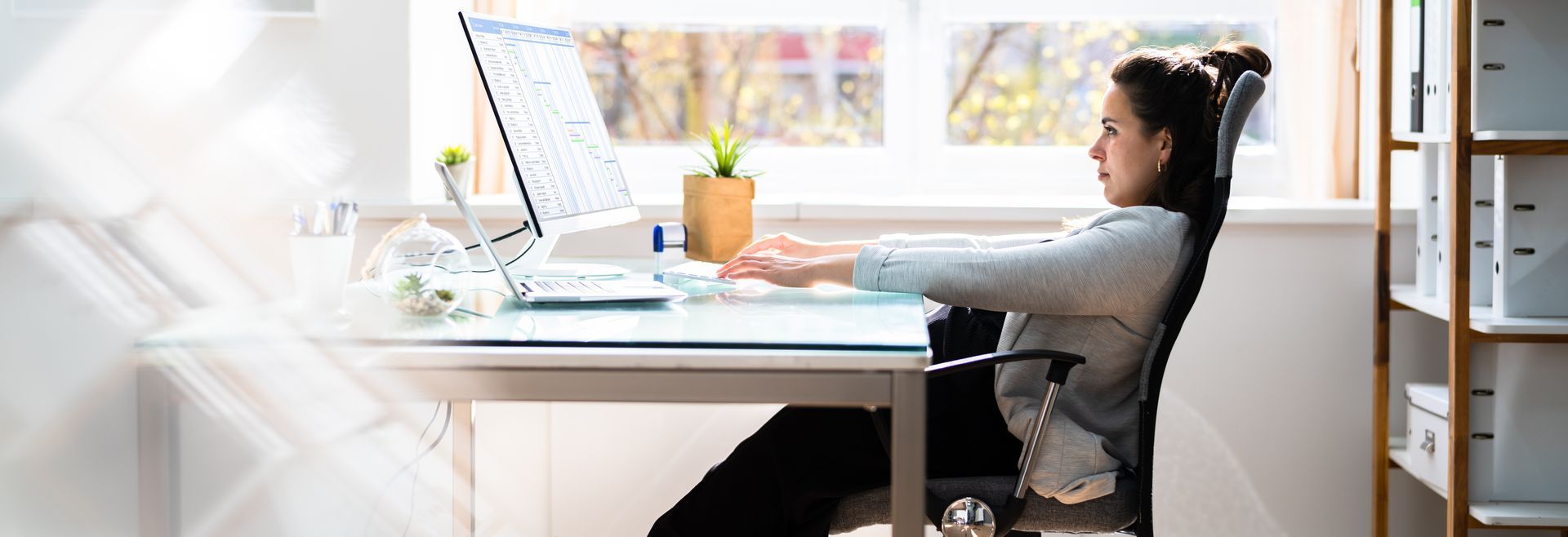
Whether you work remotely from home or you are back at the office, there's a good chance that you are not sitting properly while you are at your desk. Perhaps your favorite sitting position helps you feel relaxed and at ease while you work — but it may be surprisingly detrimental to your overall health and well-being.
Once you learn how to sit properly at your desk, you will find that you actually are more comfortable — not only while you are working, but also while you are exercising, relaxing at home and even sleeping at night.
The Importance of Proper Sitting Posture
If your professional position requires you to be at a desk for most of the day, then you likely spend more than 50 percent of your waking hours sitting. Given the vast amount of time that you spend sitting in your desk chair, it's incredibly important that you adopt a proper sitting posture.
When you are not sitting properly, you put yourself at risk of short-term and long-term health complications. According to Work-Fit.com, these include:
- Stiff muscles
- Sore shoulders and neck
- Hip problems
- Back issues
- Eye strain
At Advanced Physical Medicine of St. Charles, we offer comprehensive chiropractic services that can address these issues, but ultimately, you should work to improve your posture in order to prevent complications in the future.
Ergonomic Desk Setup for Comfort
There's more to sitting properly at your desk than choosing the right chair. Every element of your desk setup will play a role in your comfort and safety while you work. According to the Mayo Clinic, you can create a more ergonomic desk setup by:
- Keep enough room under your desk for your legs to rest properly.
- Install a wrist edge at the edge of the desk.
- Put your computer monitor directly in front of you so that you are not sitting on an angle.
- Place additional equipment within close proximity so that you do not have to reach.
The most important thing that you can do is choose an ergonomic chair that keeps your spine straight while you are sitting and working.
Maintaining the Correct Positions
According to BackIntelligence.com, you are sitting in the correct position when:
- Your pelvis is in a neutral position.
- Your shoulders and hips are aligned.
- Your hips and knees are resting at a 90-degree angle.
- All weight is evenly distributed over both of your hips.
- Both feet can rest flat on the ground.
- Your arms are parallel with the floor.

Take Breaks and Stretch
Even once you learn how to sit properly at your desk, it's still important to take breaks on a regular basis. Some experts recommend taking a break every 30 to 60 minutes, but that's not always possible. If you find that you are sore after working at your desk all day, you might want to consider massage therapy to reduce pain and decrease muscle stiffness.
Tips for Improving Ergonomics in Remote Workplaces
Whether you are working from home or renting space in town to work remotely, LinkedIn notes that you can create a more ergonomic work area by:
- Investing in a high-quality ergonomic desk chair.
- Working in an area with plenty of natural light.
- Creating an organized work space.
- Using a headset or earbuds to take calls instead of holding a phone to your ear.
For more information about
conditions we treat and how we can help you feel your best at all times,
contact Advanced Physical Medicine of St. Charles today.
Connect with Us: