What Is Vestibular Therapy? How It Helps Dizziness & Vertigo
October 16, 2026
Share this article:
Vestibular therapy is a specialized form of physical therapy for dizziness, vertigo, balance problems, motion sensitivity, and visual instability. It focuses on how the inner ear, eyes, brain, muscles, and joints process movement and position.
Symptoms may feel like spinning, unsteadiness, fogginess, or feeling “drunk” while walking. Grocery aisles, quick head turns, getting out of bed, or driving can trigger them.
Vestibular physical therapy identifies those triggers, then uses targeted exercises to improve balance, steady vision, and reduce dizziness over time.
How Vestibular Therapy Helps Dizziness and Vertigo
Vestibular therapy targets the reason certain movements make you feel dizzy, unsteady, or visually disoriented. Treatment may include eye and head exercises, balance training, walking activities, or controlled exposure to motions that trigger symptoms.
The right approach depends on the cause. Someone experiencing benign paroxysmal positional vertigo (BPPV) may benefit from a repositioning maneuver such as the Epley maneuver. Another person may need exercises that improve gaze stability or reduce motion sensitivity.
The goal is to help the brain interpret movement more accurately and respond more calmly to signals from the inner ear, eyes, muscles, and joints. Over time, everyday tasks such as turning the head, walking through a store, or getting out of bed may feel more manageable.

Signs Your Dizziness or Vertigo May Be a Vestibular Issue
Vestibular problems do not always cause spinning. Some people feel unsteady, visually overwhelmed, or off balance.
Common signs include:
- Dizziness after head movement or position changes
- Trouble walking in the dark or on uneven ground
- Blurred vision during head movement
- Feeling disoriented in grocery stores or crowds
- Brief spinning after rolling over in bed, bending down, or looking up
Because dizziness can have several causes, an evaluation can help identify what is contributing to your symptoms and which treatment approach may fit.
The Three Ways Vestibular Therapy Retrains Your Balance
Balance depends on three main inputs: the inner ear, the eyes, and signals from muscles and joints. When those inputs stop matching, the brain can misread movement and position. Vestibular therapy helps retrain that system in three main ways.
Adaptation: Recalibrating the Reflex
The vestibulo-ocular reflex helps keep your vision steady while your head moves. If that reflex is not working well, a quick head turn can make the world seem blurry or unstable.
Gaze stabilization exercises repeatedly pair head movement and a fixed visual target. Over time, the brain can improve how it coordinates eye and head movement, making tasks such as walking, driving, or scanning store shelves easier to tolerate.
Habituation: Dulling the Trigger
Some people become dizzy during specific movements, such as bending, turning quickly, or moving through visually busy spaces. Habituation uses repeated, controlled exposure to those triggers.
The goal is to teach the brain that the movement is safe, so it stops reacting so strongly. It is similar to how sailors may become less sensitive to the motion of a boat after repeated exposure.
Substitution: Working Around the Damage
If inner-ear function does not fully recover, the brain can learn to rely more on vision and proprioception, the body’s sense of position and movement.
Exercises may focus on balance, walking, visual cues, and body awareness. This relies on neuroplasticity, which is the brain’s ability to adapt and build new ways of processing movement and balance.
What a Vestibular Physical Therapy Session Looks Like
A vestibular physical therapy session usually starts with an evaluation of balance, walking, eye movement, head movement, and symptom triggers. The therapist may also ask when dizziness occurs, how long it lasts, and which daily activities have become harder.
Treatment can include gaze stabilization, balance drills, walking exercises, repositioning maneuvers, or controlled exposure to movements that bring on symptoms. The plan should match the specific cause and pattern of dizziness rather than follow the same routine for every patient.
Home Exercises That Make Therapy Work
Home exercises give the brain more chances to practice the movements introduced during therapy. Depending on the condition, that may include gaze stabilization, balance work, or repeated exposure to certain head and body movements.
The exercises should match the findings from the evaluation. Random online routines can miss the actual source of dizziness or aggravate symptoms unnecessarily. A therapist can adjust the frequency, difficulty, and type of exercise based on how you respond.
How Long Recovery Takes and What Progress Looks Like
Recovery time depends on the cause of dizziness, symptom severity, and how the body responds to treatment. Some people improve after a few visits, while others need several weeks or longer.
Progress often shows up in daily life first. You may notice steadier walking, fewer symptoms during head turns, better tolerance for stores or crowds, or less dizziness when getting out of bed. Therapy can then be adjusted as those activities become easier.

Get Evaluated for Dizziness at APM in St. Charles
Persistent dizziness, vertigo, or balance problems can interfere with driving, shopping, work, exercise, and everyday movement. A proper evaluation can help identify which movements or balance systems may be contributing to your symptoms.
Advanced Physical Medicine of St. Charles offers physical therapy in an integrated setting that also includes
chiropractic care and other supportive services. This allows treatment planning to account for balance concerns alongside mobility, pain, or musculoskeletal issues when appropriate.
Experience the difference at Advanced Physical Medicine of St. Charles.
Schedule an evaluation to learn what may be causing your dizziness and what treatment options may help you move more confidently.
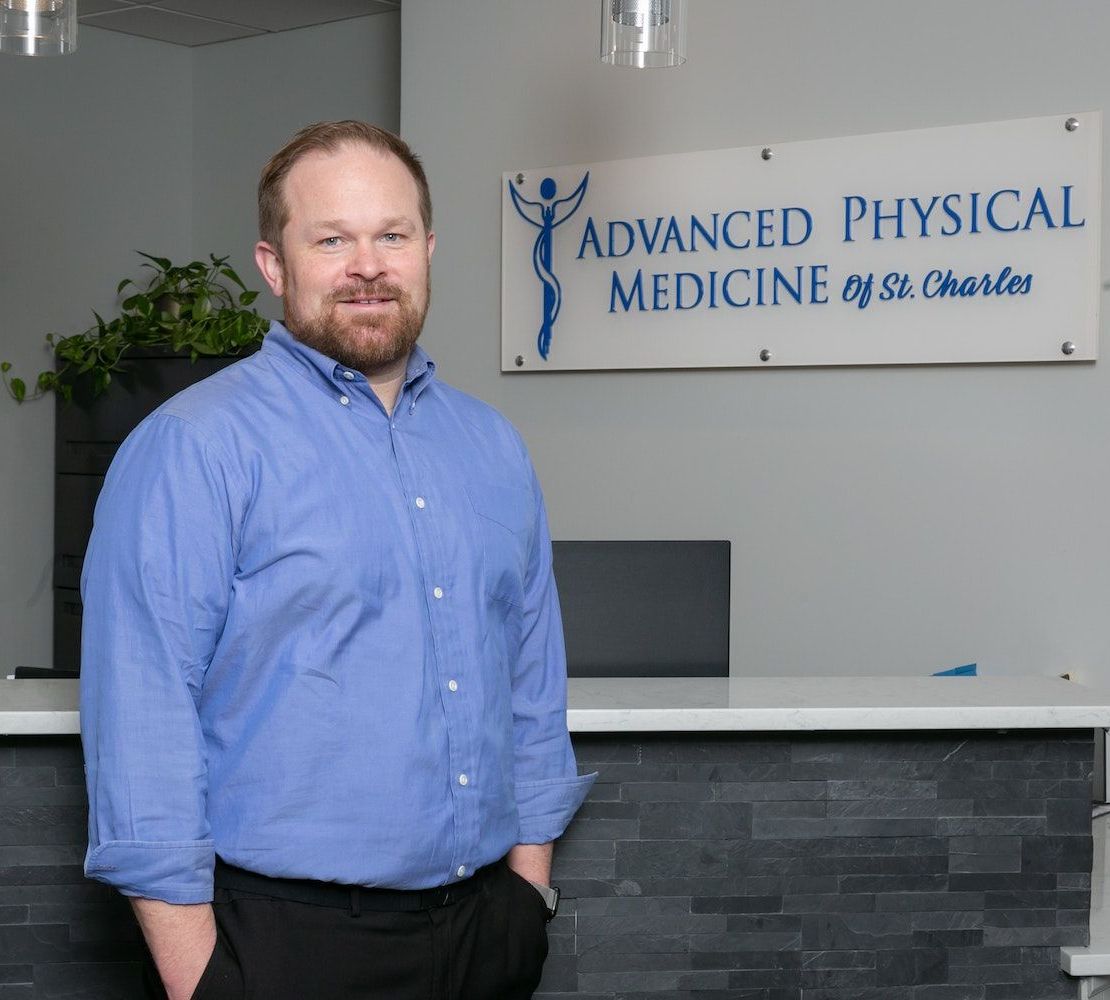
About Dr. Glenn
Board Certified Chiropractic Physician | Certified in Acupuncture
Born and raised in Oakland, Michigan, Dr. Glenn played competitive soccer for 12 years while being a 3 year varsity player and winning the Division 1 State Championship his senior year of high school. He attended Michigan State University, while earning his Bachelors of Science in human biology. He then attended National University of Health Sciences in Lombard, IL while earning a second Bachelors degree in human biology and his Doctorate in Chiropractic Medicine. He became certified in acupuncture through the post-graduate program at Lincoln College.
Connect with Us: