Share this article:
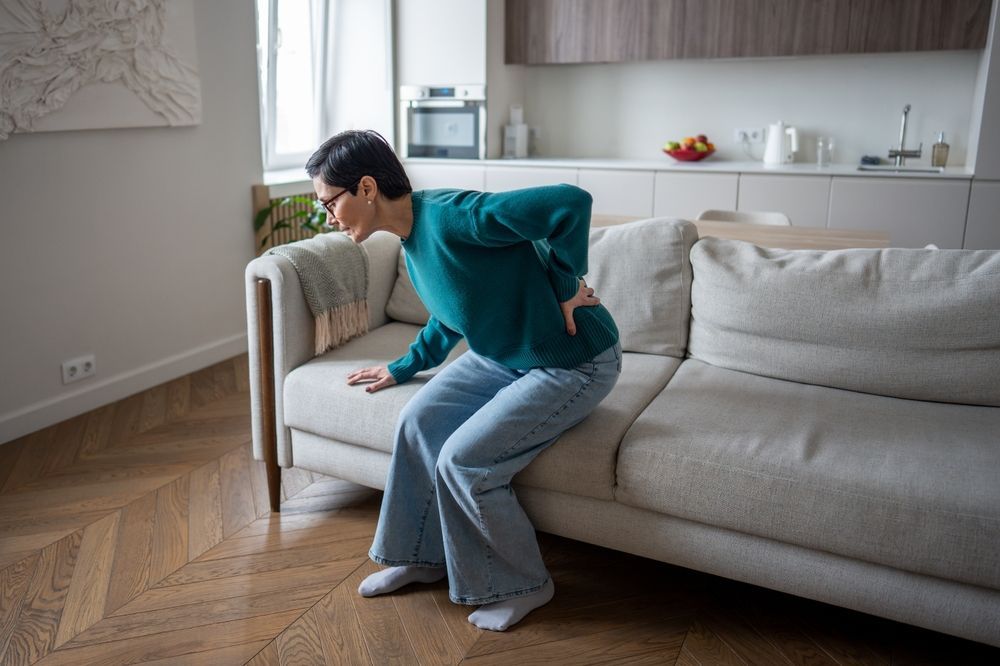
Desk work places repeated stress on the body, especially when sitting becomes the dominant position for most of the day. Limited movement allows tension to build in the neck, shoulders, mid-back, hips, and wrists, which can gradually affect comfort and productivity.
Short, intentional movement breaks help counter these effects. Incorporating simple
stretches during the workday supports better mobility, reduces stiffness, and helps the body tolerate long periods of sitting more comfortably.
Upper Trapezius and Levator Scapulae Stretches for Neck Tension
Neck tension is common among office workers due to prolonged screen time and forward head posture. Holding the head in a fixed position places stress on muscles along the top and back of the neck, leading to stiffness that can extend into the shoulders.
Upper Trapezius Stretch:
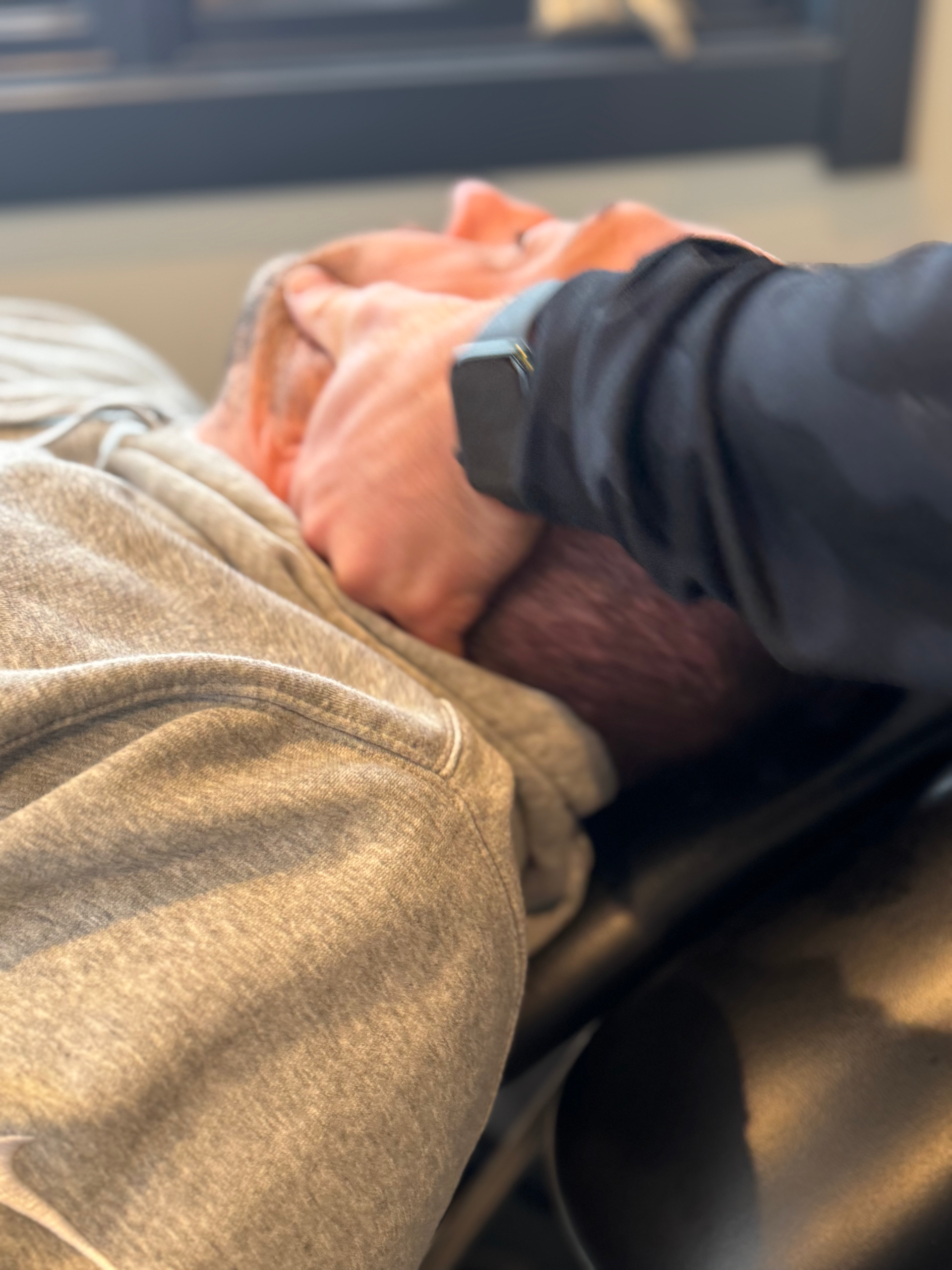
Sit upright with shoulders relaxed. Tilt the head to one side, bringing the ear toward the shoulder without lifting the shoulder. Apply light pressure with the hand if comfortable. Hold for 30 seconds and repeat twice on each side.
Levator Scapulae Stretch:
Turn the head slightly to one side, then look downward toward the armpit. Use a hand to gently guide the stretch. Hold for 30 seconds and repeat twice on each side.
Shoulder Rolls:
Maintain upright posture and roll the shoulders in slow, controlled circles. Perform about 10 repetitions forward, then reverse direction.
These movements help reduce tension in the neck and shoulders and encourage better posture during desk work.
Chest Opener Stretch to Improve Posture
Desk work frequently places the shoulders in a forward position, which shortens the muscles across the chest and contributes to a rounded posture. Over time, this position increases strain on the neck and upper back and makes it harder to sit upright comfortably.
The chest opener begins in a seated or standing position. Gently draw the shoulder blades back and down while opening the front of the shoulders. Fingers can interlace behind the body or rest along the lower back. Lift the hands slightly away from the body while keeping the chest open and the neck relaxed. Hold briefly, then release with control.
Opening the chest helps reduce tightness along the front of the shoulders and encourages better upper body alignment. Performed regularly during the workday, this movement supports a healthier posture and can lessen discomfort linked to prolonged sitting.
Standing Hip Flexor Stretch for Tight Hips
Sitting for long periods shortens the hip flexor muscles at the front of the hips. Tightness in this area can pull the pelvis forward, placing added stress on the lower back and limiting comfortable movement during standing or walking.
The standing hip flexor stretch begins in a staggered stance, with one foot positioned forward and the other behind. Gently bend the front knee while keeping the torso upright. Shift weight forward until a stretch is felt along the front of the hip on the back leg. Keep the hips level and avoid arching the lower back. Hold briefly, then switch sides.
Releasing tension in the hip flexors allows the pelvis to move more freely and reduces strain placed on the lower back. Incorporating this stretch into the workday helps counter the effects of prolonged sitting and supports more natural movement patterns when transitioning between sitting and standing.
Wrist Stretches to Ease Typing Strain
Repetitive keyboard and mouse use places continuous stress on the wrists and forearms. When these muscles stay in the same position for long periods, tension can build and lead to stiffness or discomfort during the workday.
Wrist Flexor Stretch
Extend one arm forward with the palm facing up. Use the opposite hand to gently pull the fingers downward until a stretch is felt along the underside of the forearm. Hold briefly, then switch sides.
Wrist Extensor Stretch
Extend one arm forward with the palm facing down. Use the opposite hand to gently pull the fingers downward and inward until a stretch is felt along the top of the forearm. Hold briefly, then switch sides.
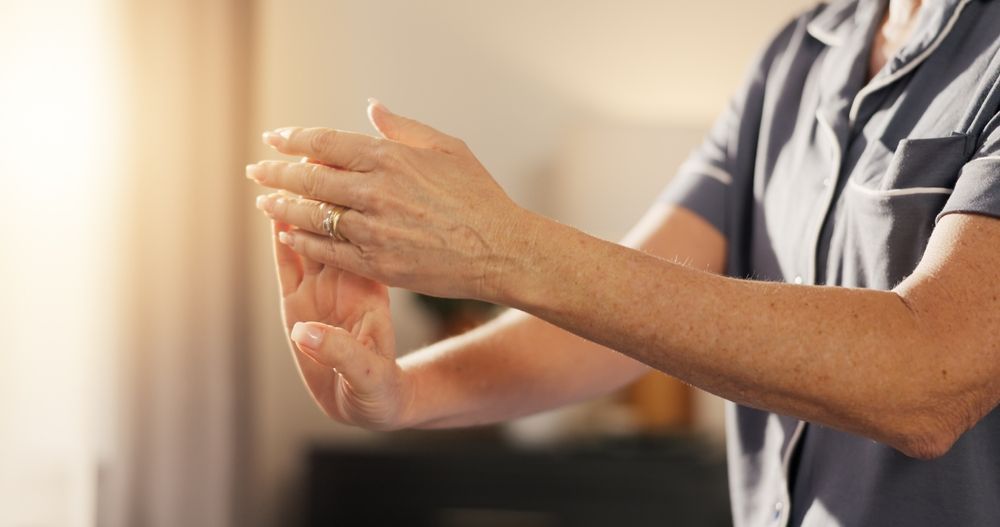
Stretching in both directions helps address muscle imbalance caused by repetitive typing and mouse use. Performing these movements throughout the day can improve comfort and reduce strain on the wrists and forearms.
How to Build a Stretching Routine That Lasts
Many office workers begin stretching when discomfort becomes hard to ignore, then stop once the pain fades. Without consistency, tension returns, and small issues become harder to manage. A routine that fits into the workday leads to more lasting results.
Short sessions spaced throughout the day tend to work better than long routines done infrequently. A few minutes of movement during breaks, between meetings, or at the start and end of the workday helps prevent stiffness from building.
Regular movement outside of stretching is just as important. Standing up and walking at least once every hour, and ideally every 30 minutes, helps reduce the strain caused by prolonged sitting and keeps the body more active throughout the day.
Advanced Physical Medicine of St. Charles provides individualized physical therapy and chiropractic care focused on
improving movement and reducing work-related strain.
Experience the difference at Advanced Physical Medicine of St. Charles. Schedule an appointment today to take the next step toward lasting comfort and improved mobility.



About Dr. Dan
Physical Therapist
Born and raised in St. Charles, Illinois, Dr. Dan initially started with Advanced Physical Medicine as a physical therapy technician in 2014. Since that time, he has earned his Bachelors in Health and Human Sciences from Northern Illinois University prior to attending NIU’s physical therapy program. He earned his Doctorate in Physical Therapy in 2019. He has been a member of the American Physical Therapy Association (APTA) since 2016 and a member of the American Academy of Sports Physical Therapy (AASPT) since 2017.
Connect with Us: